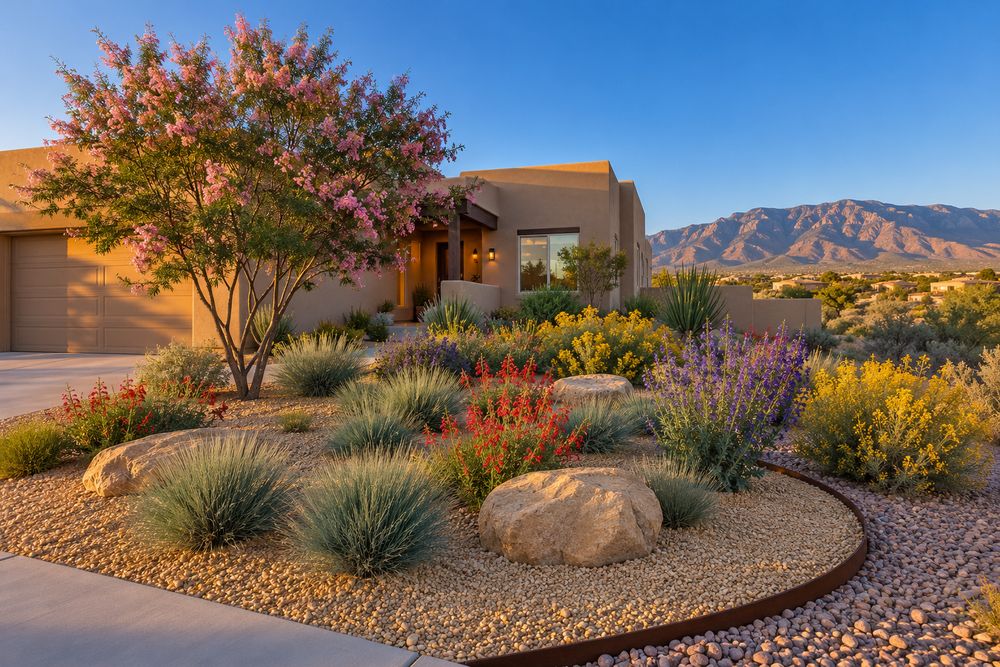
What the city means by xeriscape
Rio Rancho's xeriscaping page says xeriscaping is not "zeroscaping," and it is much more than rocks and gravel. The city lists the pieces as native and low-water trees and plants, improved soil, efficient mulching and a well-designed automatic irrigation system. That matches how we build one.
What you want is a yard that stays green and shaded with a fraction of the water a lawn needs. Bare rock with a few lonely shrubs gets hot, reflects heat into the house and still needs weeding.
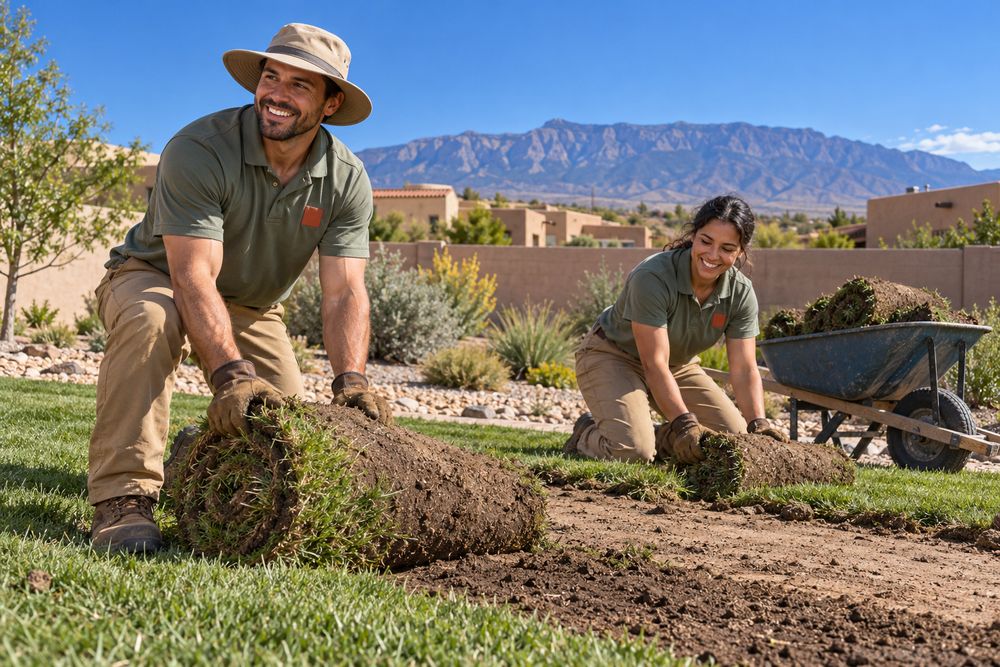 Rolling up an old lawn
Taking the lawn out
Most conversions in Rio Rancho start with a bluegrass or fescue lawn planted by the builder or a past owner. We cut the sod, take out the roots, and haul it off. Bermudagrass is harder: it comes back from runners left in the soil, so those lawns need more than one pass before planting.
Before any of that, the city wants to see the grass. The outdoor rebate page says pre-approval is required for the $1.00 per square foot credit, at least 250 square feet of real grass must still be in place during pre-approval, and landscapes that are already low-water are not eligible. Call the Water Conservation Office before you hire anyone.
Plants that work on the mesa
We build most plans around plants that grow wild in the middle Rio Grande region or come from similar high desert climates:
- Shrubs: chamisa (rabbitbrush), Apache plume, fourwing saltbush, cliffrose and Mormon tea.
- Perennials: penstemon, desert marigold, blackfoot daisy, globemallow and Mexican hat.
- Grasses: blue grama, sideoats grama, little bluestem and Indian ricegrass.
- Trees: desert willow, New Mexico olive and, where there is room and water for it, a shade tree on the west side.
- Accents: yucca, agave, sotol and cholla, used sparingly near paths so nobody brushes past a spine.
Plants are grouped by water need into hydrozones, so the drip system can give the trees deep, slow water without drowning the cactus.
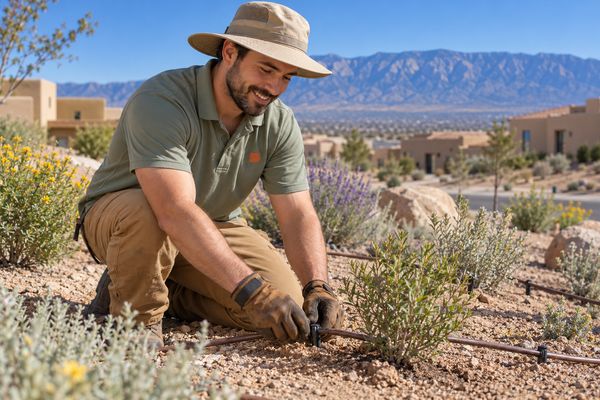
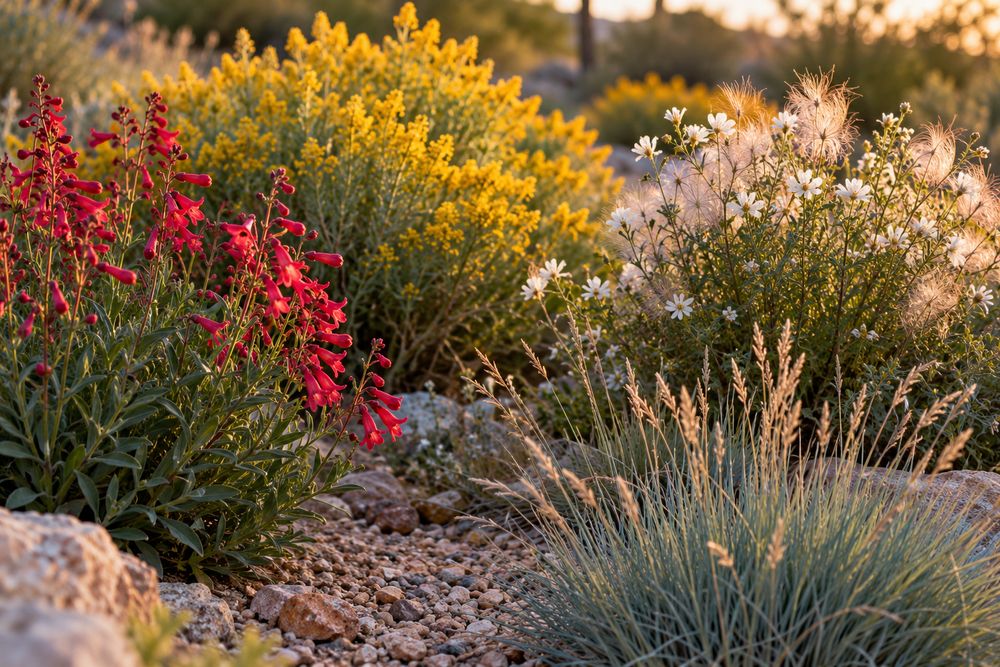 Penstemon, chamisa and Apache plume
Rock, mulch and what goes under it
Crushed granite and crusher fines are the usual ground covers. We lay them 2 to 3 inches deep over compacted soil. Landscape fabric under rock is a common habit, but it clogs with blown dust in a few years and weeds root on top of it anyway, so we use it only where the plan calls for it. Around trees and shrubs, a ring of wood mulch or shredded bark keeps the roots cooler, as long as it is not in a spot where wind will strip it.
Boulders and grading
A flat yard with rock spread evenly looks like a parking lot. We shape low berms and swales, set boulders in groups with a third of each one buried, and use the grade to move water from the roof toward the trees. See our drip irrigation page for how we water the finished beds.
What a xeriscape costs
Xeriscaping project
$3,000to$24,000
Whole-yard range
Angi · checked Oct 2026 · national
Rio Rancho grass credit
$1.00 / sq ft
Water bill credit per sq ft of real grass removed, pre-approval required
City of Rio Rancho · checked Oct 2026
The biggest swings come from how much grass and soil has to leave the site, how many tons of rock come in, and how large the plants are at planting. The pricing page breaks those down.